Guide to Car Audio Systems: How to Build the Right Setup in 2026
A practical guide to factory integration, speakers, amplifiers, subwoofers, digital signal processing, sound treatment, wiring, and tuning - organized around complete systems rather than isolated components.
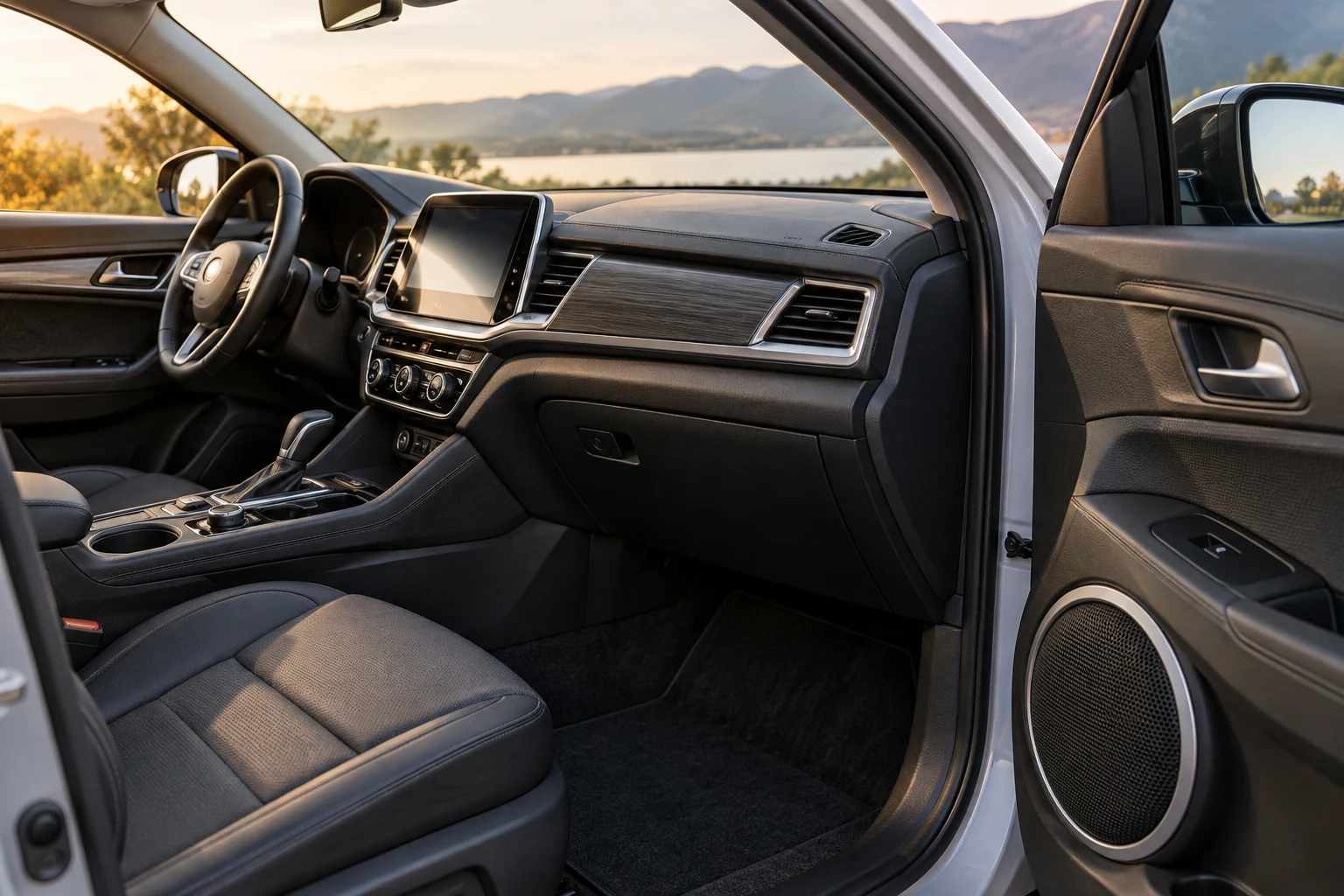
For most modern daily drivers, this preserves vehicle functions while giving meaningful control over power, crossovers, equalization, time alignment, and bass.
A good receiver can simplify the signal path and add modern phone integration, preamp outputs, crossover control, and easier amplifier installation.
If more bass is the main goal, a compact powered subwoofer is usually a more useful next step than expensive rear speakers.
Scope: This guide covers aftermarket car audio systems for everyday passenger cars, trucks, and SUVs. It focuses on sound quality and practical system design rather than SPL competition builds.
Think in signal paths, not shopping lists
- SourceFactory infotainment, aftermarket receiver, phone-connected receiver, or another audio source.
- IntegrationHigh-level input, LOC, vehicle interface, signal summing, or other OEM adaptation.
- ProcessingCrossovers, EQ, time alignment, routing, level, and phase control through DSP where needed.
- AmplificationClean continuous power matched to the speakers and subwoofer at the intended impedance.
- Acoustic outputFront speakers, rear fill if useful, subwoofer, mounting, enclosure, cabin acoustics, and tuning.
Car audio systems at a glance
| System approach | Our recommendation | Main components | Best for | Main limitation |
|---|---|---|---|---|
| Factory radio + DSP amplifier + front components + subwoofer | Best overall | OEM source, DSP/amp, component speakers, subwoofer, sound treatment | Most modern cars | Integration and tuning require care |
| Aftermarket receiver + 5-channel amp + speakers + subwoofer | Best for replaceable radios | New receiver, amplifier, front speakers, optional rear speakers, subwoofer | Older vehicles and simpler dashboards | Receiver replacement may sacrifice factory functions in some cars |
| Front speakers + powered subwoofer | Best value | Factory or aftermarket radio, better front speakers, powered sub | Moderate budgets | Limited tuning and output compared with a fully amplified system |
| Factory radio + subwoofer | Best bass-first upgrade | OEM radio, LOC/high-level input or DSP, powered sub or mono amp + sub | Drivers happy with factory mids and highs | Does not correct weak front-stage sound |
| DSP-controlled active system | Best sound-quality potential | OEM or aftermarket source, DSP, multiple amplifier channels, active front speakers, subwoofer | Enthusiasts | Cost, installation complexity, and tuning |
| Speaker-only replacement | Simplest upgrade | Replacement speakers | Easy refresh of an older or basic system | Results depend heavily on factory power and processing |
These are our recommendations, not universal rankings. The right architecture depends on the vehicle, the existing factory audio system, listening goals, available installation space, and whether factory functions must be retained.
How a car audio system actually works
A car audio system is easier to plan when you think of it as a signal chain rather than a pile of products: source -> integration and processing -> amplification -> speakers and subwoofer -> vehicle cabin.
The source may be a factory infotainment unit, aftermarket receiver, phone-connected receiver, or dedicated digital source.
The integration stage adapts that source to the aftermarket system. In a simple car, this may be nothing more than RCA preamp outputs. In a modern factory system, it may involve high-level inputs, a line output converter, signal summing, load simulation, a vehicle-specific interface, or DSP correction.
The amplifier raises the signal to a level capable of driving the speakers. Crossovers determine which frequencies reach which drivers. Tweeters reproduce high frequencies, midrange or door woofers handle the middle and upper bass region, and the subwoofer handles the lowest frequencies.
A DSP can sit between the factory source and amplifiers, be built into an amplifier, or sometimes be integrated into an aftermarket receiver. Current automotive DSP platforms can provide signal summing, equalization, channel routing, crossovers, time alignment, level adjustment, phase control, and tools for correcting processed OEM signals. AudioControl's current DSP documentation illustrates that kind of feature set.
The last component is the car itself. Speaker location, door construction, glass, seats, reflective surfaces, road noise, and the driver's off-center seating position all affect what reaches your ears. This is one reason why spending more on speakers alone does not guarantee a proportionate improvement in sound.
The best car audio system for most people
Our preferred everyday system looks like this: factory radio -> OEM integration/DSP -> amplified front component speakers -> restrained rear fill if needed -> subwoofer.
We would also apply sound-damping material around the front speaker mounting areas and address obvious door or trim resonance.
This architecture makes sense because the factory radio is increasingly difficult or undesirable to replace, while an aftermarket DSP and amplifier can work downstream of it. Crutchfield describes factory systems where separate channels may carry different frequency ranges and where factory amplifiers also handle functions such as warning chimes. DSP manufacturers including Audison and AudioControl provide tools specifically intended to analyze, sum, correct, and re-time these OEM signals.
For the front stage, component speakers give the installer control over woofer and tweeter placement. Separating the tweeter from the woofer can improve imaging because the tweeter can be mounted higher and aimed more effectively than a coaxial driver low in a door.
We would then add a subwoofer rather than expecting the door speakers to reproduce everything. The goal is not necessarily overwhelming bass. A subwoofer lets the main speakers concentrate on the frequencies they reproduce better while providing proper extension at the bottom of the spectrum.
This arrangement also gives you a useful upgrade path. The system can start with integration, speakers, and amplification, then gain a subwoofer or more sophisticated tuning later.
Should you keep the factory radio?
Keep the factory radio when it controls more than music
Keeping the original radio is generally our first choice in a newer vehicle if the infotainment system controls vehicle settings, cameras, climate functions, warning sounds, navigation prompts, or a complex factory amplifier.
Factory premium systems can distribute different signals to different speakers rather than delivering a simple full-range left and right output. Some also expect the original amplifier or speaker load to remain connected. That can require signal summing, a suitable high-level input, an interface, or DSP rather than a basic RCA converter.
Replace the radio when the vehicle makes it straightforward
In an older or simpler vehicle, an aftermarket receiver can still be one of the most useful upgrades. A good receiver can simplify the complete signal path and may provide RCA preamp outputs, high-pass and low-pass crossovers, equalization, time alignment on some models, subwoofer level control, Apple CarPlay, Android Auto, backup-camera support, and additional USB or digital-media functionality.
Apple states that CarPlay can be added to existing vehicles through compatible aftermarket systems, while Google similarly supports Android Auto with compatible stereos.
Our recommendation: replace the head unit when it improves both usability and audio architecture without compromising important factory functions. Do not replace it merely because aftermarket radios were traditionally considered the first step in a stereo upgrade.
Car speakers: where we would spend the money first
Front speakers matter most
For a driver-focused system, we would spend disproportionately on the front stage. Crutchfield notes that rear speakers generally make less contribution to the listening experience in the front seats, while front speakers establish the primary soundstage. Its current speaker guidance recommends focusing on the front first when the budget cannot cover the whole vehicle at once.
That does not mean rear speakers are useless. Rear passengers may need them, and modest rear fill can make a system feel more spacious. But in a sound-quality-oriented system, rear speakers should normally support the presentation rather than pull it behind the listener.
Component speakers vs coaxial speakers
We prefer component speakers in the front when the installation allows it. A component set separates the woofer and tweeter and normally includes either a passive crossover or is intended for use with active filtering. The tweeter can often be mounted in a factory sail-panel, upper-door, A-pillar, or dash location instead of being locked into the center of a woofer low in the door.
This flexibility can improve soundstage height and imaging. We prefer coaxial speakers when simplicity, price, or installation effort matters more than maximum imaging control. A coaxial speaker packages the drivers together and is often easier to fit into a stock location.
Neither format automatically guarantees better tonal quality. Installation, tuning, amplification, and the quality of the individual product still matter.
Speaker sensitivity matters if you are not adding an amplifier
A speaker upgrade driven only by a factory radio should not be selected the same way as a speaker set intended for a powerful external amplifier. Crutchfield recommends considering higher-sensitivity speakers for low-powered factory systems and paying close attention to RMS power handling when an external amplifier will be used.
Our recommendation: if you intend to keep factory power, prioritize efficient speakers designed to work well on modest power rather than buying a high-power component set that will never receive the power it was designed around. If you are installing an external amplifier, prioritize appropriate RMS power handling, physical fit, tonal character, and installation quality.
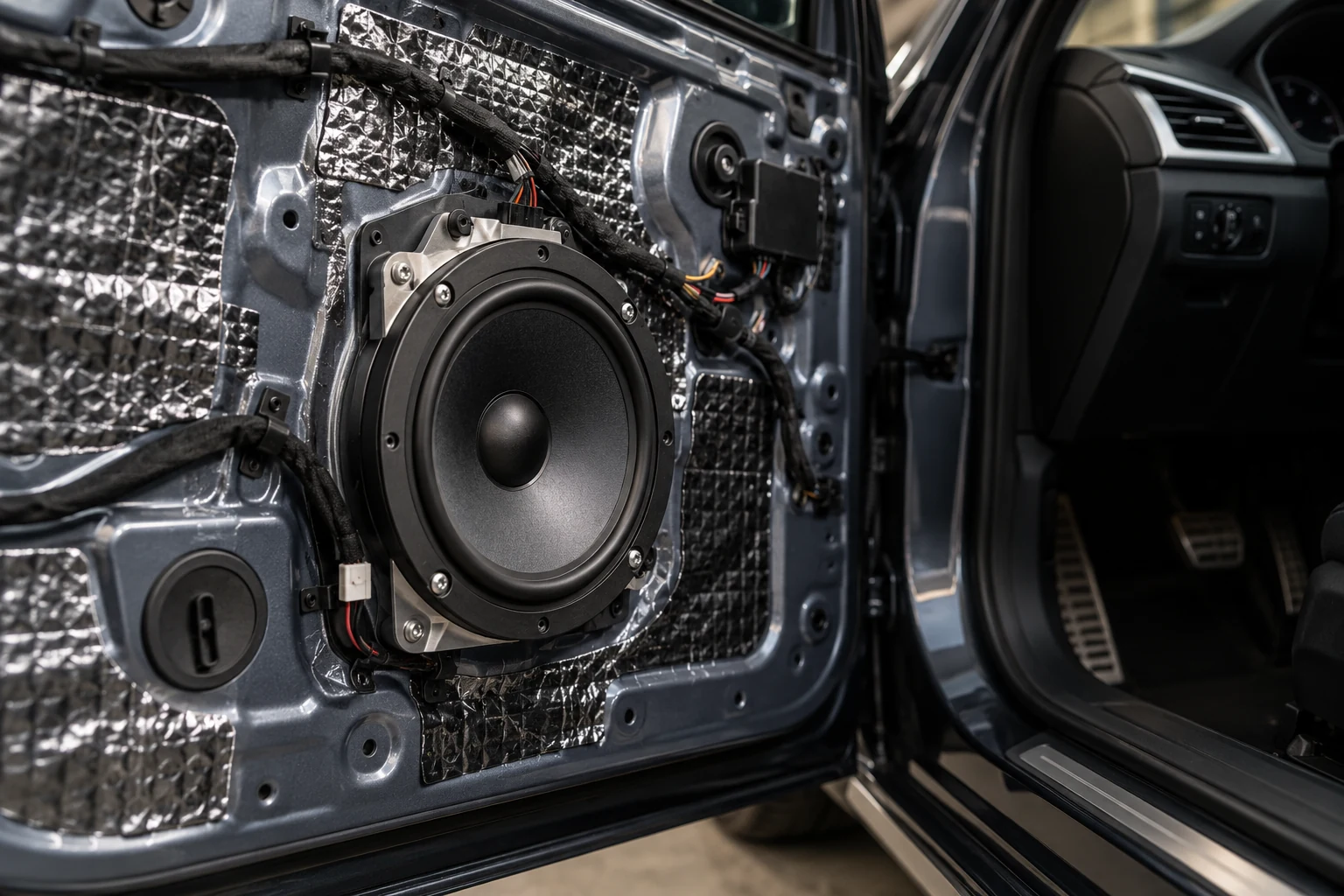
Amplifiers: power matters, but the number on the box is not enough
An amplifier gives speakers more clean electrical power and usually more usable headroom than a head unit alone.
The important comparison is not the largest "MAX POWER" number printed on the packaging. Use continuous or RMS ratings measured at the impedance you will actually run.
ANSI/CTA-2006-D defines standardized testing methods for in-vehicle amplifier performance, and CTA maintains a program for amplifiers independently tested according to its 12-volt amplifier standard. That makes standardized continuous-power figures more useful for comparisons than loosely defined peak claims.
Match amplifier power to speaker power handling
For full-range speakers, compare the amplifier's RMS output per channel at the intended impedance with the speaker manufacturer's RMS power-handling specification.
For subwoofers, both RMS power and final wired impedance matter. An amplifier may produce very different power into 4 ohms, 2 ohms, or 1 ohm, and not every amplifier is stable into every load. Crutchfield's subwoofer matching guidance therefore treats impedance and RMS power as the two critical variables.
Our recommendation: design the speaker and amplifier combination together instead of purchasing whichever component has the biggest power number.
Why a 5-channel amplifier is attractive
For a conventional system with front speakers, rear speakers, and one subwoofer, we like 5-channel amplifiers because a single chassis can provide four full-range channels plus a dedicated subwoofer channel. Advantages include simpler packaging, fewer power connections, and fewer pieces of hardware.
The disadvantage is flexibility. If you later want an active two-way or three-way front stage with independent amplification for each driver, a basic 5-channel layout may not provide enough channels.
When separate amplifiers make more sense
- the subwoofer needs substantially more power
- the front stage is active
- more than four full-range channels are required
- installation space is distributed throughout the vehicle
- future expansion is important
- the system is intended for unusually high output
There is no sound-quality law saying that two amplifier chassis inherently sound better than one properly designed multi-channel amplifier.
Why digital signal processing has become so important
A digital signal processor is one of the most useful tools in modern car audio because a vehicle is acoustically hostile and the driver sits much closer to the left speakers than the right speakers in a left-hand-drive car.
Current DSPs can provide crossovers, time alignment, equalization, output routing, level control, polarity or phase adjustment, and, on appropriate models, OEM-signal analysis. Some can also sum factory signals or attempt to reverse factory equalization and timing before aftermarket tuning begins.
Time alignment
The driver's ears are not equally distant from each speaker. Without correction, the nearer speaker reaches the listener earlier. Time alignment delays the closer channels so arrival times can be brought closer together at the chosen listening position. Crutchfield identifies this as one of the central tools for improving automotive soundstage and imaging.
Crossovers
Crossovers keep drivers operating in appropriate frequency ranges. A high-pass filter can keep deep bass away from a door speaker or tweeter. A low-pass filter can keep midrange and treble away from a subwoofer. A band-pass filter defines both upper and lower limits for a midrange or midbass driver.
Equalization
Equalization is valuable after the underlying signal path, crossover setup, level, timing, and installation are correct. It should not be used as a repair tool for everything else. A severe cancellation caused by speaker placement or phase interaction cannot necessarily be corrected by simply adding large amounts of EQ.
Do you need DSP?
For a simple speaker replacement on a basic factory radio, probably not. For an amplified modern factory system, we would strongly consider it. For a high-end active system, we consider DSP fundamental.
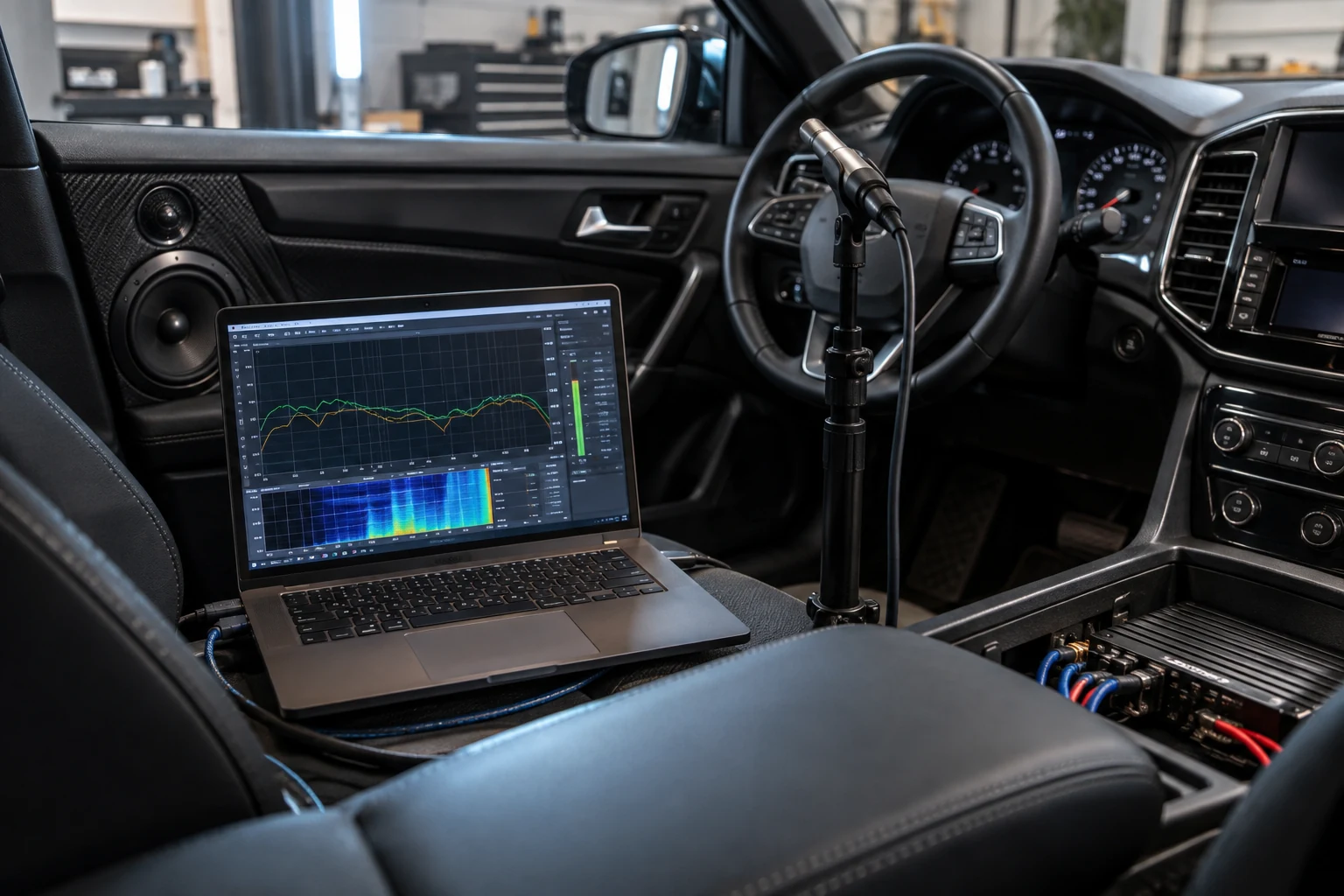
Subwoofers: the part of the system door speakers cannot fully replace
A subwoofer is not only for people who want the car to shake. Adding a subwoofer gives the system a driver specifically designed for low frequencies and allows the front speakers to be filtered so they do not have to reproduce the deepest bass.
Powered subwoofer vs separate subwoofer and amplifier
We recommend a powered subwoofer when space, installation simplicity, and moderate output matter most. A powered subwoofer packages the amplifier and subwoofer together. Compact under-seat and small-enclosure designs can be particularly useful in vehicles where cargo space matters.
We prefer a separate subwoofer and amplifier when output, enclosure choice, or future flexibility matters more. The separate approach gives you control over woofer model, impedance, enclosure design, amplifier power, and placement.
Sealed vs ported subwoofer
Our default recommendation for a balanced daily-driver system is a sealed enclosure when adequate output can be achieved in the available space. Sealed enclosures are generally smaller and are commonly chosen for controlled, accurate bass.
A ported enclosure uses a tuned vent to increase output around its operating range. Properly executed ported designs can produce greater output for a given amount of amplifier power, although they normally require more enclosure volume and more careful design.
Choose a ported system when output and efficiency are priorities. Choose sealed when compact size and controlled bass are priorities. Neither design is inherently "good" or "bad." A well-designed ported enclosure is better than a badly designed sealed one, and vice versa.
The enclosure is part of the subwoofer system
Do not treat the box as packaging. Enclosure volume and design directly affect subwoofer performance. Crutchfield notes that a properly sized enclosure can allow an inexpensive driver to perform well, while a poorly designed enclosure can compromise an otherwise excellent woofer.
Our recommendation: use the enclosure volume and alignment recommended for the specific subwoofer rather than selecting a box solely because the woofer physically fits in the hole.
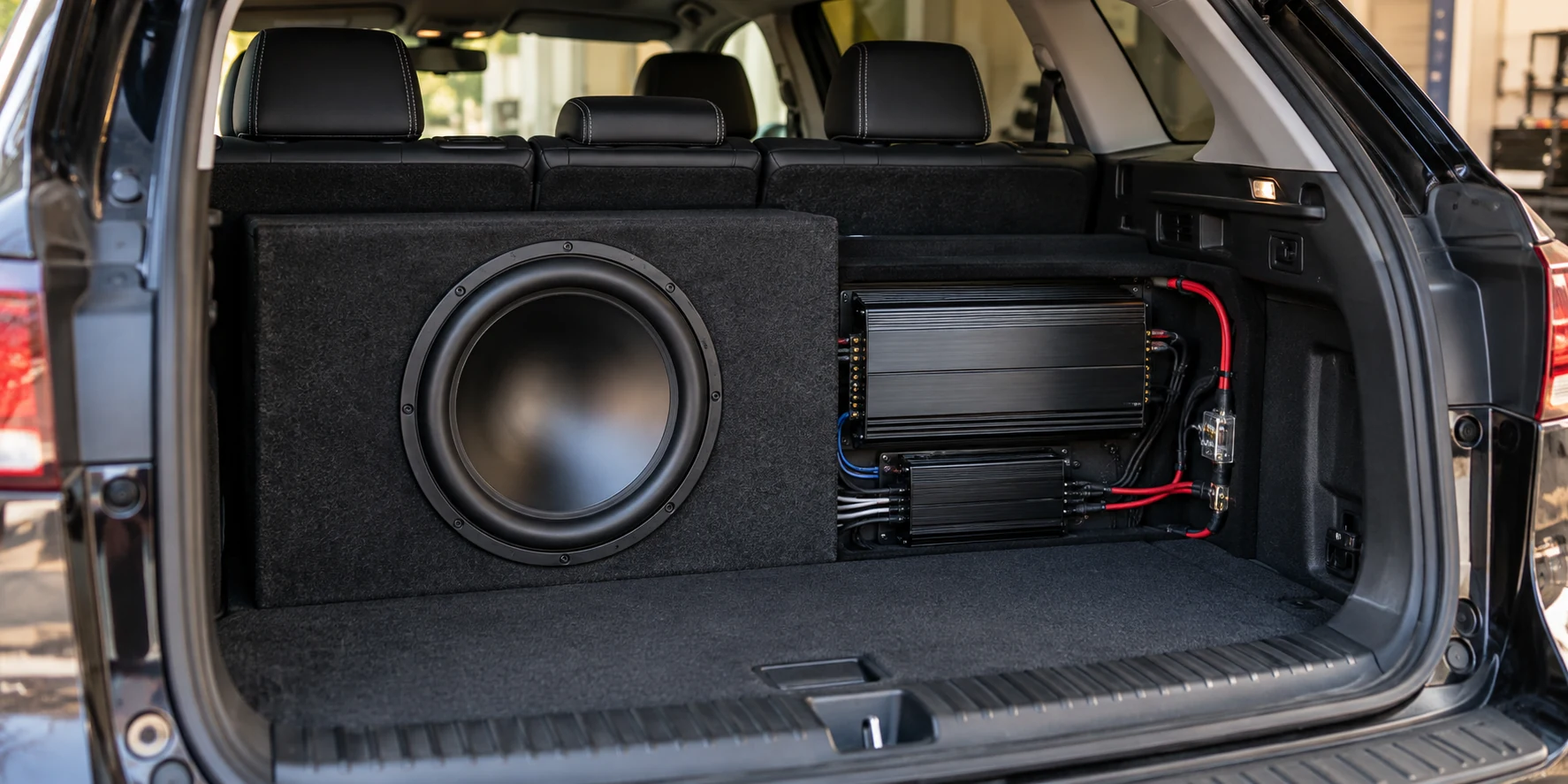
Sound damping: an upgrade that does not appear on the spec sheet
A good door speaker is mounted to a large piece of thin vehicle sheet metal and trim, not to an inert home-audio cabinet. That matters.
Vibration and road noise can mask detail and allow panels around the speaker to resonate. Sound-damping material can reduce panel vibration and help isolate door-mounted speakers. Crutchfield specifically identifies doors as one of the most useful first locations because damping around the speakers can reduce resonance and road noise.
We would rather install a good front speaker correctly in a treated door than spend the entire budget moving to a more expensive speaker while leaving a poor mounting environment untouched.
Useful treatment can include damping sheet on resonant metal, sealing or reinforcing the speaker mounting adapter, reducing air leakage between the speaker and trim panel, and eliminating obvious rattles. The goal is not necessarily to cover every square inch of the vehicle.
Factory integration: solve this before ordering equipment
Modern OEM audio can contain built-in factory amplifiers, actively crossed-over speaker channels, time alignment, factory EQ, bass reduction at higher volume, center-channel processing, active noise cancellation, warning chimes, navigation prompts, load detection, and digitally controlled amplifiers.
This means a signal taken from one factory speaker may not contain the complete musical spectrum.
A DSP or interface capable of signal summing can combine multiple frequency-limited factory channels when appropriate. Products designed for OEM integration can also provide correction for input EQ, timing, phase, or load-detection behavior.
High-level input vs line output converter vs DSP
High-level amplifier input: appropriate when the factory output is relatively straightforward and the amplifier can safely accept its voltage.
Line output converter: converts a speaker-level signal to a lower-level signal appropriate for an amplifier. More advanced models can do substantially more than simple voltage reduction.
DSP: appropriate when the factory signal requires summing, frequency-response correction, time correction, routing, or more detailed tuning.
Crutchfield notes that many modern factory systems require either an LOC or DSP rather than simply connecting the factory speaker output directly to a conventional amplifier input.
Our preference is to use the simplest integration method that correctly preserves the original signal and vehicle functions. Adding complexity that serves no purpose is not an upgrade.
Wiring and tuning are part of the system, not cleanup work
- Size power cable correctly.Power and ground cable must be thick enough for amplifier current demand and cable-run length. Follow the amplifier manufacturer's guidance or a properly calculated capacity chart.
- Fuse near the battery.The main fuse protects the power cable if it shorts to the vehicle chassis. Crutchfield's installation guidance places the main fuse very close to the battery, preferably within approximately six inches.
- Protect and ground the installation.Use a grommet or protective bushing through metal panels and treat the ground connection as seriously as the positive connection.
- Tune in the right order.Set safe gains and crossovers first, then levels, timing and phase relationships, and finally EQ. Gain is input sensitivity, not another volume control.
Five car audio system builds we recommend
Balanced daily-driver system
Signal path: factory radio -> DSP amplifier -> front component speakers + rear fill -> subwoofer. Add targeted door damping. This is our preferred architecture for many modern vehicles because it preserves the original interface while correcting the weakest parts of the audio chain.
Daily drivers, modern infotainment systems, and balanced music listening.
Integration and DSP tuning require more expertise than a simple speaker swap.
Clean-slate aftermarket system
Signal path: aftermarket receiver -> 5-channel amplifier -> front component speakers + rear speakers + subwoofer. This is one of the cleanest architectures when the vehicle allows a straightforward receiver replacement.
Vehicles with replaceable radios, owners who want CarPlay or Android Auto, and DIY-friendly systems.
Not appropriate when removing factory infotainment sacrifices important vehicle functions.
Front speakers + powered sub
Signal path: factory or aftermarket radio -> replacement front speakers + compact powered subwoofer. If the front speakers are driven directly by a low-powered radio, choose models suited to that amount of power.
Modest budgets and vehicles that do not need extensive factory-signal correction.
Less output and tuning flexibility than a DSP-amplified system.
Factory system + subwoofer
Signal path: factory system -> suitable high-level input/LOC/DSP -> powered sub or mono amplifier -> subwoofer. This works well when the owner already likes the factory system except for its lack of low-frequency impact.
Leased vehicles, factory-interface retention, and bass-focused upgrades.
It does not solve weak imaging, poor factory speakers, or problematic factory EQ elsewhere in the system.
Active DSP system
Signal path: source -> DSP -> individual amplifier channels -> tweeters + midranges/midbass drivers + subwoofer. In an active system, the DSP handles crossover functions before the amplifier channels, allowing individual control of drivers rather than relying solely on passive component crossovers.
Serious enthusiasts and custom installations.
A poorly tuned active system can sound worse than a simpler passive system. The extra channels and controls only help when they are used correctly.
The order we would upgrade a car audio system
- Understand the factory system first. Determine whether the radio is replaceable, whether a factory amplifier exists, which speakers receive which signals, and what factory functions depend on the audio system.
- Improve the front stage. Install suitable front speakers and make sure they are mounted properly.
- Add sound treatment where it matters. Door treatment and better speaker mounting can improve the performance of the hardware already installed.
- Add amplification and DSP when needed. This becomes especially important with demanding aftermarket speakers or processed factory systems.
- Add the subwoofer. Choose the enclosure, amplifier, and impedance as a system.
- Address rear speakers last unless rear passengers are a priority.
- Tune the entire system as one system.
There are exceptions. Someone satisfied with the factory sound except for bass should add the subwoofer earlier. Someone buying an older car with an obsolete receiver may reasonably replace the receiver first.
The point is to work toward a coherent final architecture rather than repeatedly replacing equipment that becomes incompatible with the next upgrade.
Common car audio mistakes
Buying speakers before understanding the factory system
A low-impedance premium factory speaker, an actively crossed factory driver, and a conventional aftermarket coaxial speaker are not automatically interchangeable. Check electrical and physical compatibility first.
Shopping by peak watts
Use RMS or continuous ratings and the relevant impedance. A huge peak-power number is of little use if you do not know what the amplifier can continuously deliver into the actual speaker load. CTA's in-vehicle amplifier standard exists specifically to improve the consistency of amplifier power measurement.
Turning the gain all the way up
Gain matches signal levels. It is not a loudness control.
Spending heavily on rear speakers while neglecting the front stage
For a driver-focused system, we consider this poor budget allocation. Front speakers dominate the stereo presentation for the front occupants, while rear speakers are normally supporting fill.
Installing a powerful subwoofer with no plan for the rest of the system
More bass is not the same as better integration. The subwoofer should blend with the main speakers rather than sound like a separate audio system installed in the trunk.
Ignoring the enclosure
A subwoofer and its enclosure form an acoustic system. Box design materially affects the result.
Ignoring the doors
Mounting an expensive speaker in a resonant, poorly sealed door can leave performance on the table.
Installing an amplifier without adequately protecting the power wire
The main power cable should be properly sized, protected through metal panels, and fused close to the battery.
Assuming more EQ is always better
Large boosts may consume headroom or mask a deeper installation, phase, crossover, or cancellation problem. Fix the system architecture first and equalize second.
Three decisions that shape the whole build
| Factor | Factory radio | Aftermarket receiver |
|---|---|---|
| Vehicle integration | Usually best | Vehicle-dependent |
| Installation simplicity | Simple to retain, integration downstream may be complex | Easy in older cars, potentially difficult in highly integrated cars |
| Smartphone features | Depends on vehicle | Modern units can add CarPlay/Android Auto |
| Clean preamp outputs | Often unavailable | Common on suitable aftermarket models |
| Factory signal processing | May require correction | Usually gives more direct system control |
| Appearance | Fully integrated | Depends on dash kit and receiver |
| Our preference | Modern integrated vehicles | Older/simple vehicles where replacement is clean |
Our conclusion: do not treat receiver replacement as mandatory. In a modern vehicle, preserving the factory interface and improving everything downstream can be the more rational architecture.
| Factor | Component speakers | Coaxial speakers |
|---|---|---|
| Tweeter placement | Flexible | Fixed with woofer |
| Imaging potential | Higher when properly installed | More limited |
| Installation | More involved | Simpler |
| Crossover | Separate passive or active arrangement | Usually integrated |
| Cost | Typically higher for comparable product tiers | Often lower |
| Our preferred use | Front stage | Rear fill or simple replacement |
Component speakers have more installation variables, but that is precisely why they can produce a stronger front soundstage.
| Factor | Sealed | Ported |
|---|---|---|
| Enclosure size | Usually smaller | Usually larger |
| Output efficiency | Lower | Higher around tuning region |
| Character | Commonly chosen for controlled, accurate bass | Commonly chosen for greater output |
| Design sensitivity | Relatively straightforward | More sensitive to enclosure and port design |
| Our preferred use | Balanced compact daily system | Higher-output system where space permits |
Both can produce excellent bass when correctly designed.
DSP amplifier vs separate DSP and amplifiers
Choose a DSP amplifier when packaging efficiency and simpler wiring matter. Combining processing and amplification in one chassis is attractive for a daily-driver installation.
Choose a separate DSP and separate amplifiers when maximum routing flexibility, channel count, future expansion, or specialized amplifier power is required.
Neither architecture automatically has better sound quality. The implementation and tuning matter more than the number of chassis.
Do you need rear speakers?
For a daily family vehicle, probably yes. For a driver-focused sound-quality system, not necessarily.
Rear speakers can improve coverage for back-seat passengers and create ambience, but excessive rear output can pull the stereo presentation behind the listener. Crutchfield recommends keeping rear fill relatively subtle when the goal is a front-oriented soundstage.
Our preference is therefore: spend on the front stage first. Add competent rear fill when passengers or the desired listening presentation justify it.
How loud is too loud?
A good audio system does not need to be painfully loud to be impressive.
NIOSH uses 85 dBA averaged over eight hours as its recommended occupational exposure limit and reduces recommended exposure duration by half for every additional 3 dB. That is an occupational guideline rather than a car-specific consumer listening limit, but it illustrates the important relationship between level and exposure time.
Repeated high-volume listening can damage hearing. If you routinely listen loudly, reducing road noise can be useful for reasons beyond sound quality because it can reduce the temptation to overpower background noise simply by increasing volume.
How we researched this guide
What this guide is - and is not
This is a research-based guide. We did not claim first-hand installation or listening tests for every type of system discussed.
Technical claims were checked against current documentation and guidance from sources including the Consumer Technology Association, Apple, Google, AudioControl, Audison, Crutchfield, and NIOSH.
Manufacturer documentation was used for describing functions such as DSP capabilities. CTA documentation was used for standardized amplifier measurement context. Crutchfield's technical material was used as an independent installation and system-design reference. Apple and Google documentation were used for current smartphone-integration requirements. NIOSH was used only for general hearing-risk context.
The architecture recommendations and statements about where we would allocate a budget are our editorial judgment. They should not be interpreted as claims that one system architecture is objectively superior in every vehicle.
Frequently asked questions
What is the best car audio system for most people?
For most modern vehicles, our preferred system is the factory source feeding a correctly integrated DSP amplifier, quality front component speakers, a subwoofer, and targeted front-door sound treatment. It preserves factory functionality while improving amplification, frequency control, imaging, and low-frequency extension.
What should I upgrade first in a car audio system?
For sound quality, we normally start by understanding the factory signal and improving the front speakers and their installation. If bass is the only major complaint, a subwoofer may be the better first upgrade.
Do better speakers need an amplifier?
Not always. Efficient speakers can work well from a factory or aftermarket receiver, but higher-performance speakers often benefit from the additional clean power of an external amplifier. Match the speaker's sensitivity and RMS power requirements to the available power.
Is a DSP worth it in car audio?
A DSP is particularly valuable in a modern factory system or a serious sound-quality build. It can provide crossovers, EQ, time alignment, level control, routing, phase adjustment, and, on appropriate models, OEM-signal summing or correction.
Can I add an amplifier without replacing the factory radio?
Yes. Depending on the vehicle, the amplifier may accept speaker-level signals directly or require a line output converter, DSP, or vehicle-specific interface. Complex amplified factory systems should be evaluated before equipment is selected.
Can I add a subwoofer to the factory stereo?
Yes. A powered subwoofer or subwoofer amplifier can be integrated with many factory systems using appropriate high-level inputs, an LOC, or a DSP/interface.
Are component speakers better than coaxial speakers?
Component speakers provide more control over tweeter placement and crossover design, which can improve imaging and soundstage when installed correctly. Coaxial speakers are simpler and are often a sensible choice for rear fill or straightforward factory replacement.
Do rear speakers matter?
They matter more for rear passengers than for a driver-focused soundstage. For front-seat sound quality, our preference is to prioritize the front speakers and keep rear fill at a supporting level.
How powerful should my amplifier be?
Use the speaker or subwoofer's RMS power-handling rating and impedance, then select an amplifier capable of appropriate continuous power at that load. Avoid matching equipment based on peak or maximum-power numbers alone.
Does amplifier impedance matter?
Yes. Amplifier output and operating limits depend on the connected impedance. A subwoofer system must therefore be wired to a final load the amplifier is designed to handle.
Is amplifier gain the same as volume?
No. Gain adjusts amplifier input sensitivity so the amplifier is correctly matched to the source output. It should not simply be turned to maximum.
Is a sealed or ported subwoofer better?
Neither is universally better. We prefer sealed enclosures for many balanced daily-driver systems because they are normally more compact and suit controlled bass. Ported systems are attractive when greater output and efficiency are priorities and sufficient enclosure space is available.
Does sound deadening really improve car audio?
It can. Damping material applied to resonant vehicle panels can reduce vibration and road-noise intrusion, and treating the doors can improve the environment in which door-mounted speakers operate.
Do I need to replace my factory head unit to get good sound?
No. In many modern cars, keeping the factory radio and adding correct integration, DSP, amplification, speakers, and a subwoofer is the more practical approach.
Can an aftermarket radio add Apple CarPlay or Android Auto to an older car?
Yes, when a compatible aftermarket receiver can be installed. Apple explicitly lists aftermarket CarPlay systems, while Google requires a compatible car or stereo for Android Auto. Vehicle-specific dash fit and retention of factory functions still need to be checked.
Is an expensive car audio system always better?
No. System design, installation, integration, and tuning can matter as much as individual component price. A coherent system with correctly matched power, appropriate crossovers, good speaker installation, a suitable subwoofer enclosure, and competent tuning can outperform a more expensive collection of poorly integrated components.
Final recommendation
For a modern daily-driven vehicle, our first choice is a factory-retention system built around correct integration, DSP amplification, a strong front component set, a properly matched subwoofer, and targeted sound treatment.
For an older car with a replaceable radio, an aftermarket receiver feeding a 5-channel amplifier is our preferred simpler architecture.
For a limited budget, upgrade the front speakers and installation first, then add a powered subwoofer if the factory system lacks bass.
For maximum sound-quality potential, build around DSP from the beginning and use individually amplified front drivers, careful measurement, and professional-level tuning.
The main principle is simple: do not shop for a car audio system as a collection of unrelated speakers, amplifiers, and impressive wattage numbers. Design the complete signal path first. The best-performing system is the one in which the source, integration, processing, amplification, speakers, enclosure, wiring, vehicle acoustics, and tuning all work together.
Sources and references
Primary technical, compatibility, installation, and safety references used in this guide.
- Consumer Technology Association - ANSI/CTA-2006-D - standardized in-vehicle amplifier testing and power measurement context.
- AudioControl - DM-810 DSP Matrix Processor - representative DSP functions including summing, EQ, delay, routing, and crossover control.
- Audison - bit Drive - OEM integration and tuning functions including de-EQ and timing/phase correction.
- Crutchfield - How to Match Subwoofers and Amplifiers - RMS power and impedance matching.
- Crutchfield - Car Amplifier Installation Questions - crossover and amplifier installation guidance.
- Crutchfield - Sealed or Ported Subwoofer Enclosures - enclosure characteristics and tradeoffs.
- Crutchfield - How to Install a Car Subwoofer - enclosure sizing and installation context.
- Crutchfield - Car Sound Deadening Installation - door treatment and resonance reduction.
- Crutchfield - Vibration Damping Installation Guide - door treatment, panel resonance, and road-noise reduction.
- Crutchfield - Car Amplifier Installation Guide - cable routing, fuse placement, firewall protection, and grounding.
- Crutchfield - How to Set Your Car Amplifier's Gain - input sensitivity and gain-setting guidance.
- Crutchfield - Adding an Amplifier to a Factory Stereo - factory-radio retention with added subwoofer or amplifier.
- Apple - CarPlay - aftermarket CarPlay support.
- Google - Android Auto Help - current Android Auto compatibility requirements.
- CDC/NIOSH - Noise and Hearing Loss - hearing-risk and exposure-duration context.